By: Nana
Appiah Acquaye
The GSMA is calling for
greater regulatory certainty around satellite services to accelerate market
access, protect consumers and existing mobile networks, and support the
expansion of satellite connectivity.
The issue was discussed at
the NTN Summit held during M360 ASEAN, where GSMA Regulatory Director, Nitin
Sapra examined the evolving regulatory landscape for satellite services and the
challenges facing policymakers as new low Earth orbit (LEO) satellite systems
emerge.
Sapra said two broad
regulatory models are developing. The first involves partnerships between
satellite providers and mobile network operators, where existing regulatory
frameworks can generally apply. The second involves satellite services
operating without existing mobile infrastructure, an area where current
policies may not adequately address the emergence of new LEO services.
To support policymakers, the
GSMA has developed a Satellite Regulatory Playbook based on principles outlined
in its Satellite Regulatory Preparedness position paper.
The playbook provides
guidance across eight regulatory areas, including local establishment, national
security, consumer protection, infrastructure, end-user terminals, fiscal
considerations and enforcement.
The discussions also
considered the specific challenges facing countries with geographically
dispersed populations and complex connectivity needs.
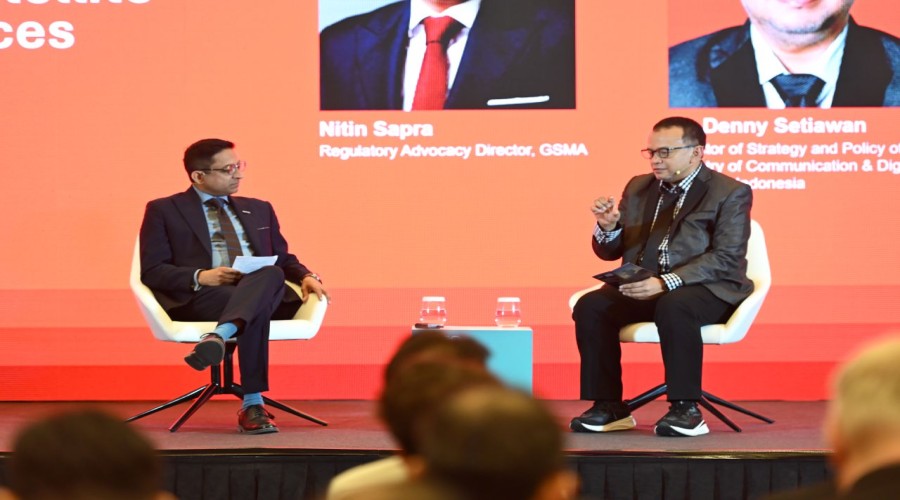
During a fireside chat,
Sapra was joined by Dr Denny Setiawan, Director of Strategy and Policy for
Digital Infrastructure at Indonesia’s Ministry of Communication and Digital
Affairs.
Setiawan highlighted the
opportunities presented by satellite connectivity for Indonesia’s more than
17,000 islands, while stressing the need to review existing policies without
undermining current investments.
He said regulators must
balance technological innovation with appropriate safeguards and welcomed key
elements of the GSMA’s Satellite Regulatory Playbook, particularly its focus on
local presence, national security and digital sovereignty.