By: Nana
Appiah Acquaye
Djibouti has used its
participation in the first International Space Summit in Paris to strengthen
international cooperation, advance national space capabilities and promote
equitable access to space resources for African and emerging spacefaring
countries.
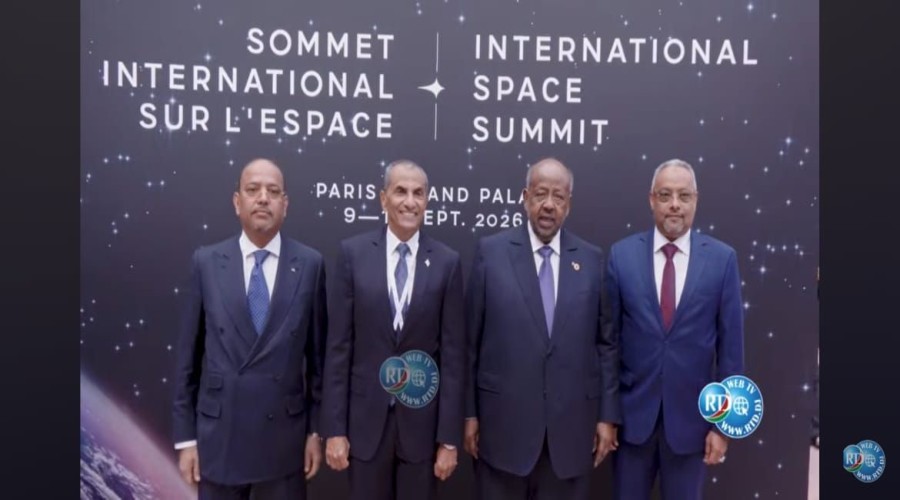
Held on September 9 and 10,
2026, at the Grand Palais in Paris at the initiative of French President
Emmanuel Macron, the summit brought together representatives from 90 countries
and international organisations.
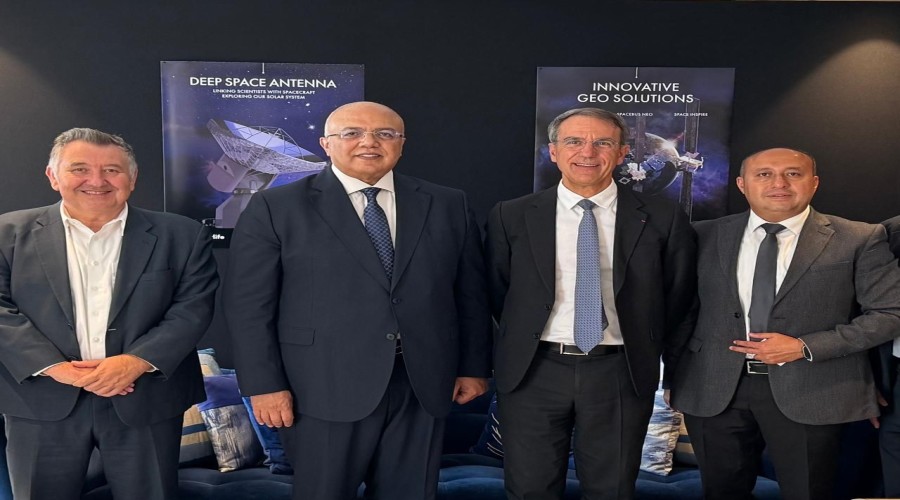
Djibouti’s delegation was
led by President Ismaïl Omar Guelleh. The Ministry of Higher Education and
Research was represented by Minister Dr. Nabil Mohamed Ahmed, Secretary General
Aboubaker Hassan and Director General of the Centre for Studies and Research of
Djibouti (CERD), Dr. Jalludin Mohamed.
During the summit, President
Guelleh highlighted key milestones in Djibouti’s national space programme,
including the training of its first engineers in partnership with the
University of Montpellier and the launch of the Djibouti-1A and Djibouti-1B
satellites in 2023 and 2024 respectively.
The next phase of the
programme includes the planned creation of a National Geospatial Centre in
partnership with France. The centre is expected to strengthen national
capabilities and infrastructure in Earth observation, geospatial data and
training, while supporting the country’s longer-term ambition of establishing a
Djibouti Space Agency.
President Guelleh also
called for fair and sustainable access to orbital frequencies and other space
resources for African countries and emerging space nations, arguing that
equitable access is necessary for their participation in the future space
economy and innovation.
Djibouti signed three
declarations during the summit covering the safe and sustainable use of outer
space under the 1967 Outer Space Treaty and COPUOS framework, participation in
the Copernicus programme and open access to its data, and space science, accessibility
and the strengthening of international collaboration.
The country also engaged in
discussions around the Space4Ocean Alliance, an initiative supported by
France’s National Centre for Space Studies (CNES) that brings together the
space and maritime communities. Given Djibouti’s location at the intersection of
the Red Sea, Gulf of Aden and Indian Ocean, space-based applications could
support monitoring of its coastline, marine pollution, ecosystems and the
effects of climate change.
The Djiboutian delegation
further used the summit to deepen exchanges with French and international
partners on the development of the National Geospatial Centre, access to Earth
observation data, training and skills transfer.