By: Nana
Appiah Acquaye
Microsoft South Africa Chief
Executive Officer Vukani Mngxati has called for greater investment in skills,
access and locally relevant artificial intelligence systems as AI reshapes the
future of work across Africa.
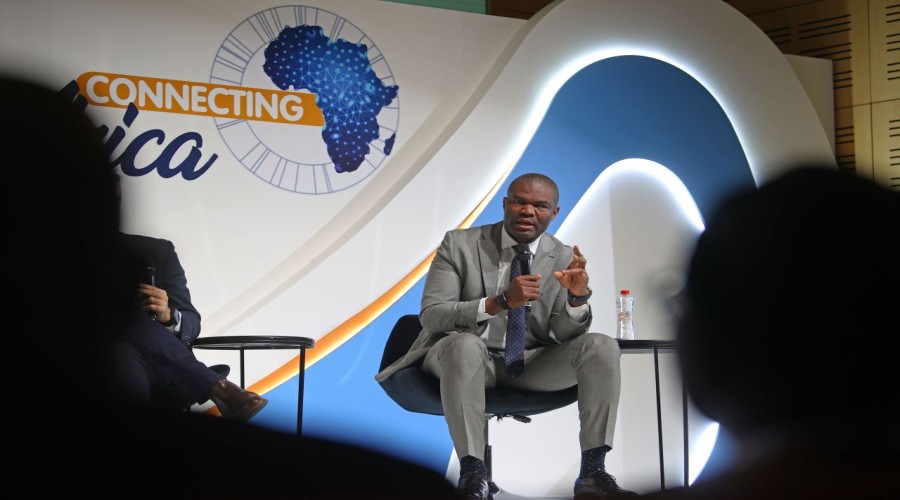
Mngxati made the remarks at
GEC+Africa 2026 in Cape Town during a discussion on AI and the workforce shift
unfolding across the continent alongside Robert Koen of Amazon Sub-Saharan
Africa. The session was moderated by Winnie Karanu.
Mngxati said the current
period of rapid AI development should be viewed as an opportunity for people
and organisations to learn and adapt, rather than as a weakness.
“The hero of AI is you,” he
said, stressing the importance of placing people at the centre of Africa’s AI
transition.
He compared the current AI
transformation to the emergence of the combustion engine, which fundamentally
changed how people moved, traded and lived. In his view, AI represents a
similar technological turning point with the potential to reshape work and everyday
life.
Mngxati cited figures
showing that 64% of African workers used AI at work during the past year,
compared with a global average of 54%. While the figures indicate strong
adoption across the continent, he noted that only 35% of workers believe their
skills will remain relevant over the next three years.
He described the gap between
AI adoption and confidence in future skills as a key challenge that Africa must
address through skills development and broader access to technology.
According to Mngxati, AI
should enhance human potential rather than diminish it, while people need the
skills and confidence to use the technology effectively. Businesses, he added,
must also have opportunities to benefit from AI, with access extending beyond a
limited group.
He further called for AI
systems to become more reflective of African realities, arguing that current
models do not yet fully capture the ways Africans think, work and live.
Mngxati said Africa must
move beyond being a consumer of AI technologies and become a contributor to how
those technologies are developed, shaped and applied.
“Because here is what I keep
coming back to: I now carry a PhD in my pocket. So do you,” he said. “The
question is what we build with it.”