By: Nana
Appiah Acquaye
African artificial
intelligence leaders and technology stakeholders have called for stronger
collaboration between governments, industry, investors and innovators to
accelerate the adoption of homegrown AI solutions across the continent.
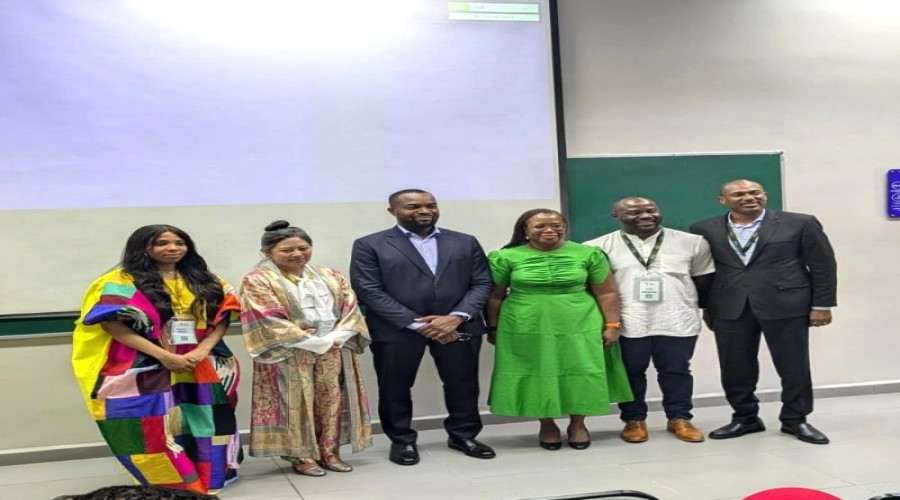
The call was made during
discussions at the Deep Learning Indaba 2026, where Nigeria’s Minister of
Communications, Innovation and Digital Economy, Dr. Bosun Tijani, joined other
AI ecosystem leaders to highlight the importance of collective action in building
Africa’s artificial intelligence future.
Dr. Tijani, who is also the
co-founder of innovation hub Co-creation HUB (CcHUB) Limited, emphasized the
need for stakeholders across the continent to support one another in developing
an AI ecosystem capable of addressing Africa’s unique challenges and creating
global impact.
The session brought together
leaders from the AI Hub for Sustainable Development, Nigeria AI Scaling Hub
(NAISH), development institutions, technology companies, research organisations
and startups to discuss opportunities for advancing AI innovation across
Africa.
The discussions were held as
part of a broader effort involving the G7’s AI for Development donors and the
AI Hub for Sustainable Development to support a coordinated approach to
artificial intelligence development on the continent.
Participants highlighted the
importance of moving beyond experimentation and focusing on building the
infrastructure, institutional partnerships and adoption frameworks required to
scale African AI innovations.
Key areas of discussion
included the development of offline voice technologies aimed at serving
communities with limited connectivity, energy-efficient data centre and
computing infrastructure, and AI models designed to support sectors such as
agriculture and food security.
Stakeholders noted that many
African AI startups are already developing solutions to address some of the
continent’s most pressing challenges, but challenges around procurement, trust
and access to large-scale markets continue to limit adoption.
The discussions emphasized
the need for stronger partnerships between governments, large corporations and
technology innovators to create pathways for scaling locally developed AI
solutions.
Representatives from
organisations including the African Development Bank Group, Gates Foundation,
minoHealth AI Labs, Horus Labs, Amini, Lelapa AI, DeepLeaf and other innovation
ecosystems participated in the conversation, sharing perspectives on the future
of AI development in Africa.
The session concluded with a
shared recognition that collaboration rather than competition will be central
to unlocking the full potential of artificial intelligence and ensuring that
African innovations contribute to sustainable development across the continent
and beyond.