By: Van Soul
Addey
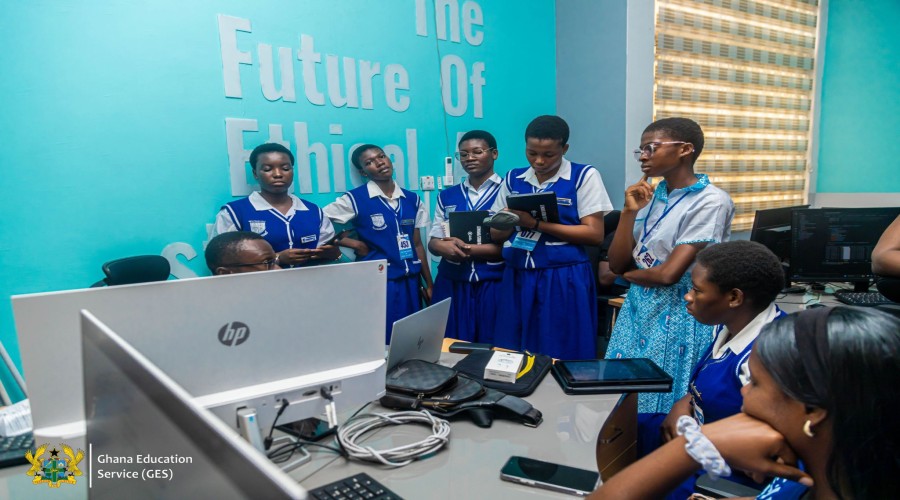
Students from five Senior
High Schools in Ghana’s Ashanti Region have visited the Responsible AI Lab
(RAIL) at Kwame Nkrumah University of Science and Technology (KNUST) to explore
artificial intelligence, programming and career opportunities in STEM.
The visit formed part of a
Girls in Tech Camp organised by the National STEM Resource Unit of the Ghana
Education Service (GES) in collaboration with UNESCO, as part of efforts to
encourage more girls to pursue careers in science, technology, engineering and
mathematics.
The participating schools
were Kumasi Wesley Girls, Afia Kobi Ampen Girls, Bosomtwe Girls, Mancells and
St. Monica’s.
At RAIL, the students
engaged directly with researchers and explored the fundamentals of artificial
intelligence and emerging technologies. Lab Manager Christiana Aggor welcomed
the students and introduced RAIL’s mission of promoting responsible AI development
in Africa.
During the engagement,
students shared different interests and expectations, including learning
programming fundamentals, developing their own AI systems and understanding how
artificial intelligence is controlled and developed.
Aggor subsequently grouped
the students with different researchers to facilitate more personalised
engagement and discussions around their areas of interest.
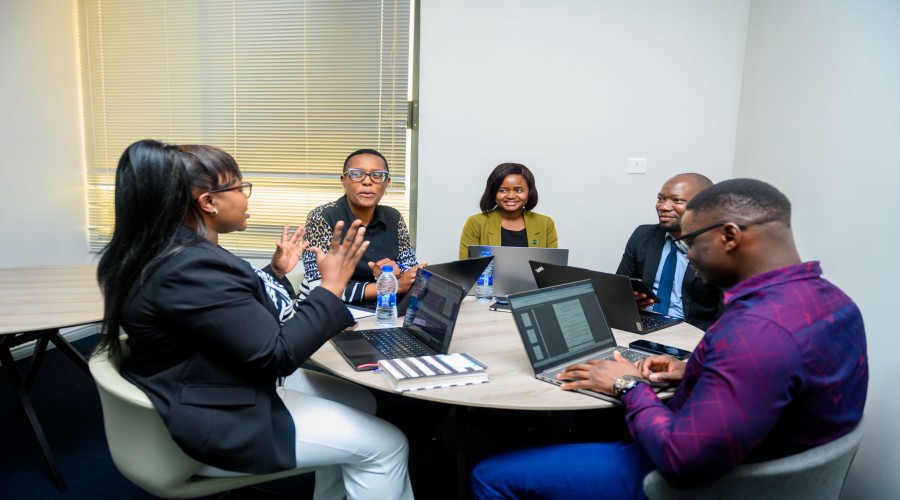
The researchers conducted
interactive sessions covering programming languages, prompt engineering, AI
fundamentals and career pathways in STEM.
Students were also
introduced to how AI models are developed, with researchers explaining that AI
systems are built by people and organisations and that young people can also
acquire the skills needed to develop their own technologies.
The sessions further
highlighted the limitations of AI, including the potential for models to
generate inaccurate information, commonly referred to as “hallucinations”.
Researchers stressed the importance of continuous human input in improving AI
systems and ensuring their responsible use.
The visit provided the
students with practical exposure to artificial intelligence and helped
demystify complex technological concepts. It also offered them a clearer
understanding of the skills and career pathways available within STEM and
Africa’s expanding technology ecosystem.