Zambia reports major digital economy gains at 3rd Digital Economy Round Table
Date: 2026-05-15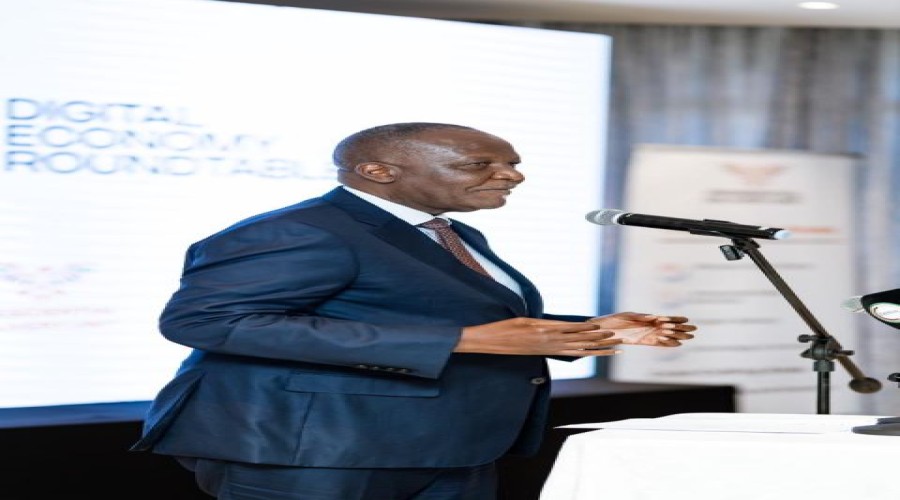
By: Nana Appiah Acquaye
The Government of Zambia has
reported significant progress in its digital transformation agenda,
highlighting expanded connectivity, improved infrastructure, and strengthened
digital services across the country.
Speaking at the 3rd Digital Economy Round Table (DERT 3) held in Lusaka, the Minister of Technology and Science, Felix Mutati said government is actively engaging stakeholders in the ICT sector to address public concerns on network quality while improving access to digital services nationwide.
He noted that reforms under
President Hakainde Hichilema’s administration have contributed to measurable
improvements in Zambia’s digital ecosystem, including expanded broadband
coverage and increased access to digital financial services.

According to data presented
at the event, Zambia now records 94.1 percent connectivity coverage, supported
by the rollout of more than 45,000 kilometres of fibre infrastructure aimed at
improving internet speed and reliability.
The government also reported
the deployment of nearly 400 private sector telecom towers this year, alongside
plans to support an additional 700 towers through partnership with the World
Bank to expand coverage in underserved communities.
Other milestones include
80.1 percent financial inclusion driven by mobile money adoption, as well as
improvements in cyber resilience, which increased from 68 percent to 92.1
percent.
In the education sector,
government partnerships with private and development actors have resulted in
the connection of 500 schools to internet services, benefiting approximately
450,000 learners through improved access to digital learning resources.
Additionally, 10,000 devices
have been distributed to women and youth entrepreneurs, while 5,000 teachers
have been trained in digital literacy to support technology integration in
classrooms.
The Social Cash Transfer
programme has also been digitised, with one million beneficiaries now onboarded
onto mobile money platforms to improve efficiency and transparency.

The government further
announced the approval of K255 million to address quality of service
challenges, including upgrades to digital infrastructure and improved
connectivity in underserved areas.
Head of the Presidential
Delivery Unit, Kusobile Kamwambi, said the Digital Economy Round Table has
strengthened collaboration between government and the private sector by
providing a platform to identify gaps, respond to citizen concerns and
accelerate digital service delivery.
She added that the platform,
established in 2025, has improved coordination and accountability across the
sector and welcomed new participants from emerging digital fields including
gaming, artificial intelligence, robotics and content creation.
The Presidential Delivery
Unit reaffirmed its commitment to ensuring that Zambia’s digital transformation
delivers tangible benefits to citizens through improved access, inclusion and
service delivery.